CEO Perspective: Has Nonotuck Gotten Too Big?
Oct 7, 2026, 03:46 PMby George H. Fleischner, Nonotuck President & CEO
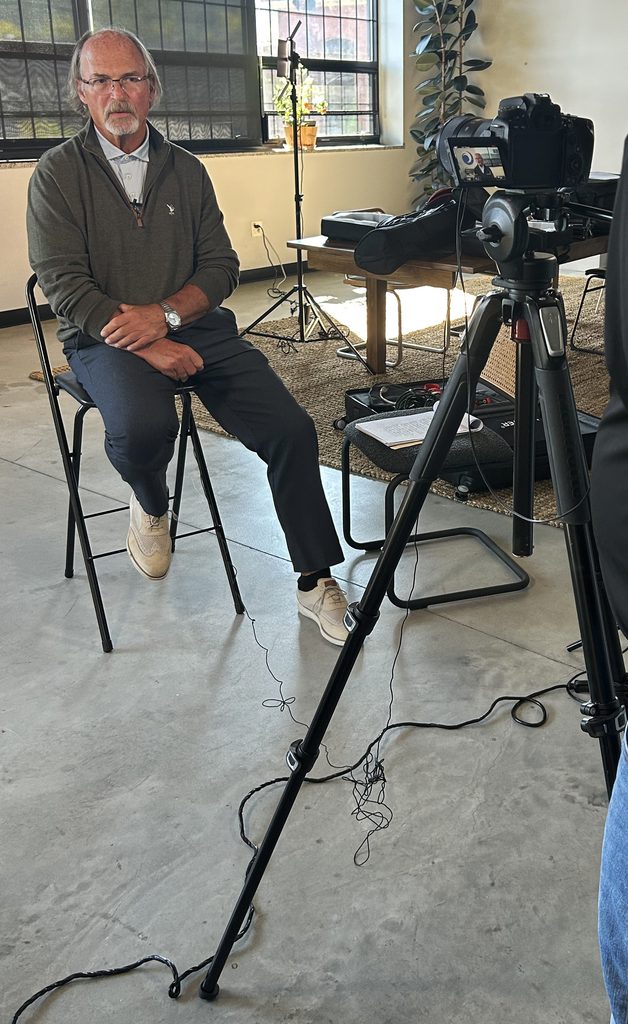
Someone asked me the other day: “Has Nonotuck gotten too big”?
I think this is a very good question, and it is actually one that we discuss internally quite a bit.
As Nonotuck began to grow, one of the questions we asked ourselves was: How do we grow while staying small? Or, perhaps more accurately, how do we carry the best qualities of being a small organization into a much larger organization?
For me, that question has always been less about numbers and more about relationships. I don’t think size itself is the danger. The danger would be becoming distant from the people we support, their families and caregivers, becoming bureaucratic, losing our values, or allowing growth to become more important than the quality of someone’s life.
That is something I think we must continually guard against.
One of the ways we have done that is through the way we’ve intentionally structured Nonotuck. Rather than creating one large, centralized organization, we built offices across the state that operate with a great deal of local identity and independence. The people working in those offices live in those communities. They know the people we support, their families and caregivers, the local DDS staff, and the communities in which people live.
In many ways, each office feels like a small local organization that is supported by the resources and infrastructure of a much larger organization.
In fact, families are sometimes surprised when they learn how large Nonotuck is because their experience of Nonotuck is primarily through their local office and the people they know there. I think that is a very good thing.
I have said for years that “we grow one person at a time.” I mean that quite literally. Growth should never become an abstract organizational objective. Every new person we support is a person whose life we need to know, whose relationships matter, whose choices matter, and to whom we are making a commitment. If we ever reach a point where growth interferes with our ability to make and honor that commitment, then I would be concerned that we had become too big.
When I look at our growth today, I don’t see that happening.
In FY26, Shared Living had a net increase of 23 people. Spread across the state, that is roughly two additional people per office, and we added the statewide sum of two case managers to support that growth. Adult Family Care grew by 83 people, and we added two case managers and two nurses. To me, that is moderate, manageable growth.
Growth has also helped us do important things for the people who work at Nonotuck. It has been an important part of our ability to provide more than 30 consecutive years of across-the-board wage increases or bonuses and more than 25 consecutive years of profit sharing. In FY26 alone, we had 23 internal promotions. I find that remarkable. Growth creates opportunities for people to build careers here, take on new responsibilities and continue contributing to our mission in new ways.
And perhaps this is a little Nonotuck-centric, but I also think we must consider the other side of the question. If we were to stop or significantly slow our growth simply because we had reached a certain size, we would also be saying no to people who could benefit tremendously from what Nonotuck provides. I would have difficulty justifying that if we still have the capacity to support people well.
But capacity cannot simply mean having enough staff, offices, or financial resources. The more important question is whether we still have the capacity to care deeply about each person.
That is why our recent CARF and DDS reviews were so meaningful. Both reviews were incredibly positive. The reviewers appreciated our staff, our structure, and our mission and values. But what stood out most to me was their recognition of how much we knew of and cared about each person we support.
That, more than anything, answers the question for me.
If an organization can grow and still know the person, really know the person, then growth and personal relationships do not have to be in conflict.
The question I want us to keep asking is not simply, “How big is Nonotuck?” It is: Do we still know the people we support? Are we still close to their families and caregivers? Are decisions still being made with the quality of people’s lives as our priority? Do our local offices still feel local? Can people reach us when they need us? Are we still listening? Are we still willing to look critically at ourselves when something isn’t working?
And, most importantly, are we still the organization we said we would be?
Today, I believe the answer to those questions is yes.
That doesn’t mean we should ever become complacent about growth. In fact, I think the larger we become, the more intentional we must be about protecting what made Nonotuck special when we were small. We must continually resist unnecessary bureaucracy. We must keep authority and relationships close to the communities we serve. We must make sure our systems support relationships rather than replace them. And we must remember that organizational growth is never the ultimate measure of our success.
The life of the person we support is.
I don’t believe there is a particular number at which Nonotuck suddenly becomes “too big.” I think we become too big when our size begins to interfere with our ability to know people, care about them, honor their lives, maintain and develop authentic relationships, and stand by them for as long as they choose us.
That is the line I would never want us to cross.